
August 6, 2026
A year ago, a Lake Bluff seller with a signed contract could reasonably expect the general home inspection to be the last hurdle before closing. That is no longer the working assumption. Buyers arriving from Chicago, Milwaukee, and out of state are now routinely commissioning three specialist inspections on top of the general, and the reports they generate are where bluff-adjacent deals are quietly being re-traded or lost.
The market is the reason. Local MLS aggregators show Lake Bluff's median list price sitting near $640,000 with average days on market around 54 as of late July 2026, and one Movoto snapshot put the July median list at $675,000 with a 9% drop from the prior month. Whichever number you prefer, the direction is the same: buyers have time, they have leverage, and they are spending both on due diligence. In this environment, the seller who waits for the inspection contingency to surface a $22,000 sewer lateral or a cracked chimney crown is the seller who gives that money back at the negotiating table.
The thesis of this post is simple. In today's Lake Bluff, the price is settled on the contract; the deal is settled on the second inspection report. Bluff-adjacent homes have four predictable failure points, and both sides of the transaction benefit when a seller front-runs each one.
The general home inspector will flag symptoms. The specialists confirm cost. On any Lake Bluff home built before 1970, expect a serious buyer to order all four:
Each one addresses a specific condition of the site that inland Lake County homes simply do not share. Take them in order.
The single most common re-trade item on a Lake Bluff pre-purchase inspection is the sewer lateral. H.T. Strenger, a plumbing firm serving the North Shore since 1911, describes the local pattern plainly: original laterals in the village are 60 to 90 years old, bluff terrain has subjected them to decades of frost heave and soil movement, and mature tree canopy has had generations to push roots through clay pipe joints. Their camera work in 60044 turns up a consistent inventory of defects: root intrusion at clay joints, pipe offset from soil movement, belly sag at low points holding water, cracked clay in lower-elevation and ravine-adjacent runs, and failed prior spot repairs.
For a buyer, a camera scope is the difference between a $400 rodding line-item and a $15,000 to $40,000 excavation. For a seller, ordering the scope before listing accomplishes two things: it gives the listing agent an honest condition to price against, and it removes the single largest source of post-inspection surprise from the buyer's side of the table. If the camera comes back clean, that video becomes marketing collateral. If it does not, the repair is scheduled on the seller's calendar rather than the buyer's leverage.
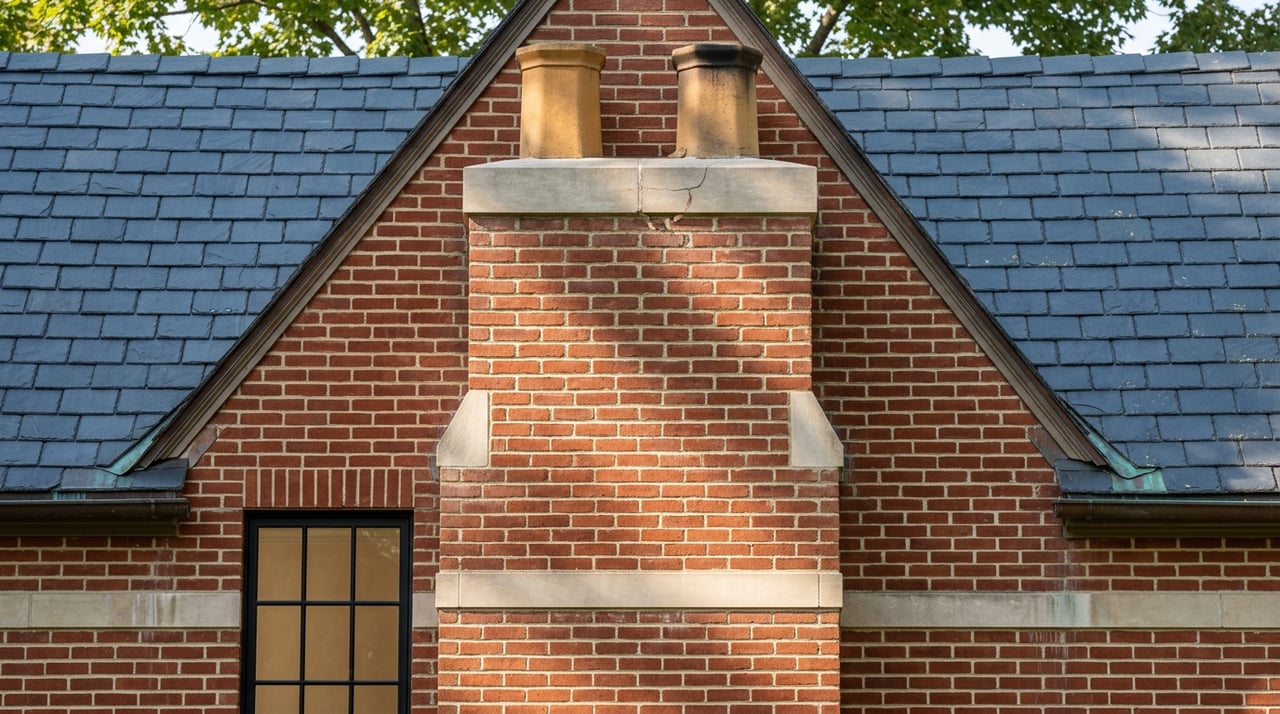
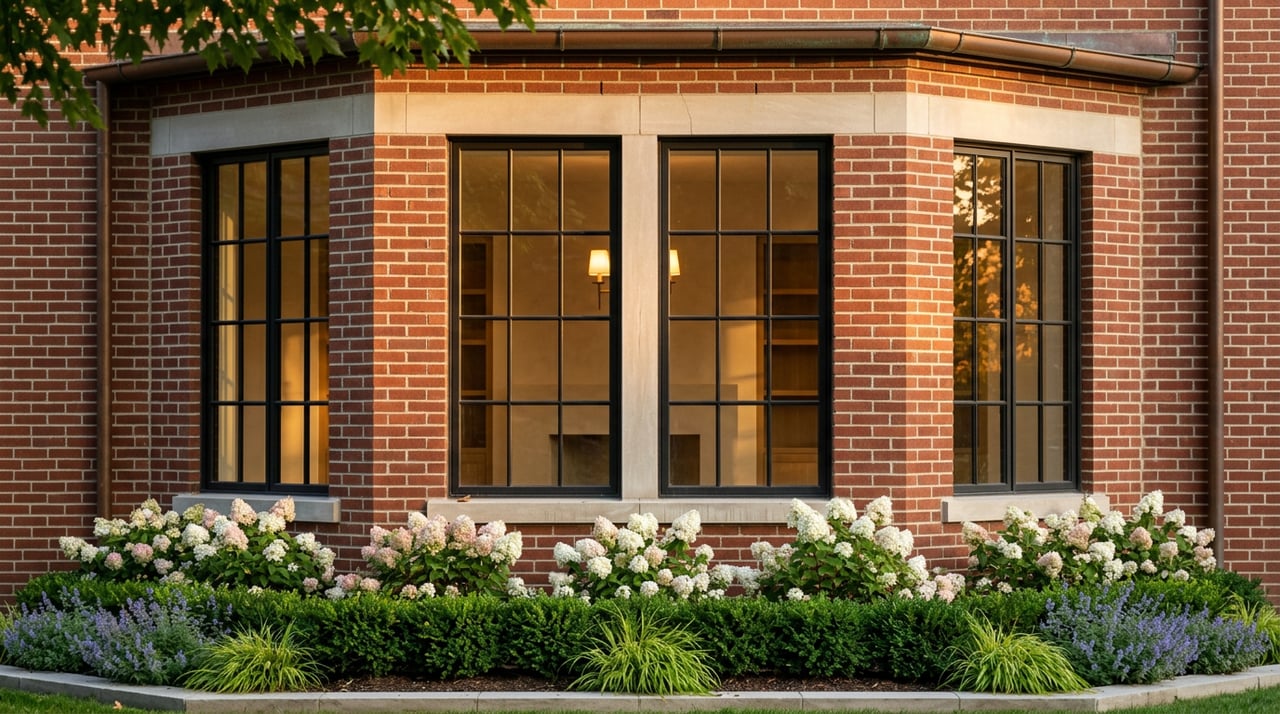
The second report separates Lake Bluff from the rest of the North Shore. Bluff elevation accelerates wind speed, and salt-laden moisture from Lake Michigan penetrates mortar joints and brick pores, where salt crystallization exerts internal pressure over time. Delta Tuckpointing, which services Lake Bluff from Libertyville, recommends bluff-adjacent chimneys and upper walls be inspected every five to seven years, rather than the ten-year interval standard on inland homes. Chimney crown failure is the most common trigger for their Lake Bluff work.
The economics are worth stating clearly. Tuckpointing in Illinois runs $8 to $25 per linear foot, with most full-facade projects landing between $1,500 and $4,500. A chimney crown rebuild with flashing replacement, on a bluff-adjacent 1950s Cape Cod near Sunrise Beach, is a scope of work Delta has documented publicly. These are not catastrophic numbers on a $1.1 million home, but they are exactly the numbers a buyer's agent will use to ask for $25,000 off the price.
A seller working with a masonry contractor before listing typically pays cost. A seller reacting to a buyer's masonry report typically pays cost plus a negotiation premium.
The third report is quieter but harder to fix. Lake Bluff sits on sandy, well-drained soils along the bluff edge, and that soil shifts. Foundation masonry on bluff-side walls opens joints as walls move slightly with settlement or frost heave, and those open joints then admit water. The repair is not just masonry work; it also addresses the drainage or settlement causing the movement.
For a buyer, the diagnostic question is whether cracking observed inside a finished basement traces to cosmetic settling or to active bluff-side movement. For a seller, the useful pre-listing step is a written statement from a foundation contractor documenting the wall's current condition and, ideally, prior remediation. Without documentation, the buyer's inspector's language will carry the day, and inspector language is almost always conservative.
The fourth report only applies to some homes, but where it applies it dominates. The regional context matters here. In neighboring Lake Forest, the City's own resident guide notes there are nearly 13 miles of ravines across 15 separate systems, almost all of them privately owned, with property lines typically running down the center of the ravine at the bottom. The document is direct about the consequence:
Since the majority of the ravines and bluffs are privately owned, property owners are responsible for taking erosion control measures and for maintaining ravines.
Lake Bluff's bluff-edge parcels carry a parallel obligation. Gillen Marine Construction, which works Lake Michigan bluff stabilization for properties from Highland Park to Lake Forest, describes bluff failure as a function of internal water, groundwater, and shoreline erosion, and their stabilization scopes involve licensed geotechnical engineers, wick drains, soldier piles, and stone shore protection. These are six-figure engagements, not weekend fixes.
For any Lake Bluff home with a rear yard that terminates at a ravine or bluff edge, a serious buyer should commission a geotechnical assessment before releasing the inspection contingency. A serious seller should have one on file already. The Village's own stormwater program acknowledges the underlying issue plainly: the storm sewer system is designed to accommodate the 100-year storm, but the intensity of that storm is increasing.
There is one procedural quirk worth internalizing. The Village of Lake Bluff Building Division, reachable through Mike Croak at 847-283-6885, handles permits for structural masonry, chimney repair, and most residential work. However, inspections on many Lake Bluff permits are performed by Lake Forest inspectors under a shared arrangement, and inspections for the next business day must be scheduled through the Village's BS&A online portal by 2:00 PM.
Two practical consequences follow. First, sellers scheduling pre-listing repair inspections should assume a full business day of lead time, not a few hours. Second, a buyer's attorney reviewing permit history should verify closure on both sides of that shared arrangement. A permit pulled in Lake Bluff and never finaled by a Lake Forest inspector is the kind of open thread that surfaces at title.
Compare two data points. Redfin's neighborhood snapshot placed the Village of Lake Bluff median sale price at $1.1 million in September 2025, with homes selling in roughly 48 days. Movoto's citywide read for July 2026 showed the median list at $675,000 with days on market of 15 by one measure. The gap is not a contradiction; it is the difference between how bluff-adjacent inventory and interior village inventory clear. What matters is the shared direction: sale velocity has normalized from the compressed timelines of the prior cycle, and price-per-square-foot is under pressure.
In that market, the buyer's inspection contingency is not a formality. It is the second negotiation, and it happens with the seller's leverage already spent. Every dollar a seller invests in pre-listing due diligence is a dollar that does not come out at re-trade, and typically does not come out at 1.3 or 1.5 times the pre-listing cost, which is roughly what a buyer's credit tends to look like once uncertainty is added.
How early before listing should a seller order specialist inspections? Six to eight weeks is comfortable. That leaves time for a masonry contractor to schedule work in curing weather (mortar curing requires 40-degree temperatures, a window that effectively closes in late October in northern Illinois) and for any sewer lateral repair to be permitted and inspected before showings begin.
Are these inspections useful on newer construction? The sewer scope and foundation review remain useful on any bluff-adjacent home, regardless of vintage, because they reflect site conditions rather than building age. The chimney and masonry inspection is most valuable on pre-1970 brick homes.
Does the seller's disclosure form cover any of this? Illinois residential real property disclosures ask about material defects known to the seller. A pre-listing specialist report changes what the seller knows, and therefore what must be disclosed. That is a question for the seller's real estate attorney, not for a blog, and it is the reason experienced Lake Bluff sellers involve counsel before ordering reports.
At LFC Partners, we build the pre-listing inspection sequence into every Lake Bluff engagement, coordinating masonry, sewer scope, foundation review, and where the site calls for it, geotechnical assessment, so the buyer's report arrives with nothing left to find. If you are weighing a Lake Bluff sale in the next twelve months, we would welcome the conversation.
Request a Complimentary Home Valuation & Private Consultation.
More on real estate insights.
August 20, 2026
August 13, 2026
August 13, 2026
August 6, 2026
July 23, 2026
July 16, 2026
July 9, 2026
July 2, 2026
June 25, 2026
At LFC Partners, real estate is more than a transaction—it’s a collaboration rooted in expertise and trust. With decades of combined experience in architecture, finance, and strategic negotiation, Ann, Jeff, and Kim bring a refined, data-driven approach to every client relationship. Whether you’re buying, selling, or investing along the North Shore, you can count on their deep market knowledge, analytical precision, and unwavering commitment to results.
LFC Partners Real Estate
(847) 828-9991
[email protected]
Ann Lyon
(847) 828-9991
[email protected]
Jeff Folker
(847) 504-6182
[email protected]
Kim Campbell
(312) 434-9372
[email protected]
600 N Western Ave Lake Forest IL 60045