
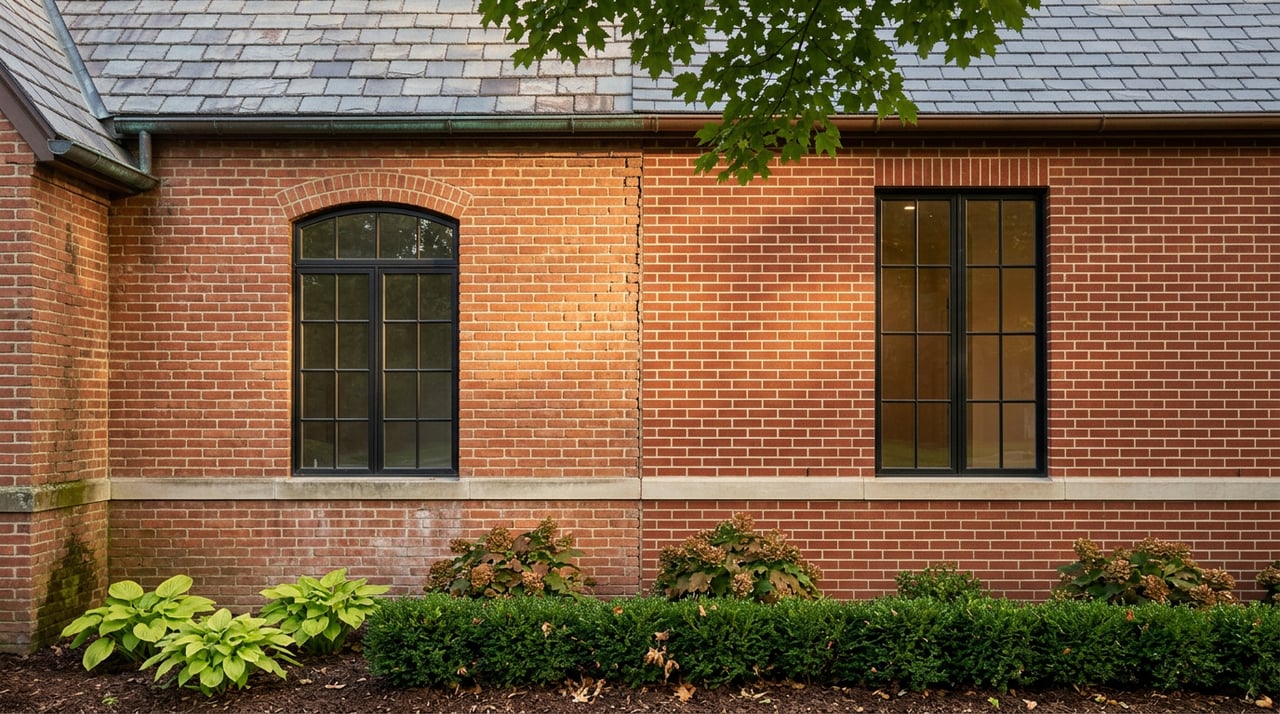
August 13, 2026
Compare Lake Forest market snapshots from real estate sites and you will find four different numbers. As of mid-2026, the Zillow Home Value Index puts the typical Lake Forest home at just over $1 million. Redfin's actual sold-price data for the three months ending May 2026 puts the median at $1.3 million, with homes closing in 49 days on average, down from 65 days a year earlier. Movoto's July 2026 snapshot lists a median asking price of $1.57 million for active listings, while a separate line on that very same page describes the current pool of listings at a median of $1.79 million.
Some of that gap is just methodology. An algorithmic estimate averaged across every home in town will always sit below a median calculated from active luxury listings alone. But methodology is not the whole story in Lake Forest. Part of what these numbers are quietly averaging together is two structurally different housing products that get lumped under one town name: a home inside one of the city's five protected historic districts, and a home that isn't. Those two products are governed by different rulebooks, reviewed by different city boards, and in one specific case, taxed differently. A portal listing will not tell you which one you are looking at.
Lake Forest sits on both the National Register of Historic Places and a local historic register, and buyers routinely assume these are the same designation wearing two names. They are not.
The City of Lake Forest's historic preservation page draws the line clearly. Properties on the National Register are eligible for certain financial incentives, most notably the Property Tax Assessment Freeze Program administered by the Illinois Historic Preservation Agency, but they do not automatically fall under the city's own Historic Preservation Ordinance. That local ordinance, adopted in 1998, only applies once a property is also listed on the city's Local Register as a Landmark or sits within one of five designated Local Historic Districts.
In other words, a house can be historic in the eyes of the federal and state government and completely unregulated by city hall on the same afternoon. Or it can carry no national recognition at all and still answer to a city commission every time an owner wants to add a dormer.
The five Local Historic Districts are the East Lake Forest Historic District, the Vine/Oakwood/Green Bay Road Historic District, the Green Bay Road Historic District, the Meadowood Dairy Historic District, and the Grove School Historic District. Individual landmark properties outside those boundaries fall under the same rules.
Inside that boundary, the city's Historic Preservation Commission reviews proposals for complete and partial demolitions, new construction, and requests for Building Scale variances, and it evaluates the compatibility of additions and alterations. The Commission meets the fourth Wednesday of each month in the City Council Chambers at 220 E. Deerpath.
The Building Scale piece is the part most buyers underestimate. Lake Forest's zoning code caps how much floor area a residence can occupy relative to its lot. For a landmark property or a home inside a historic district, exceeding that cap is not a matter of hiring a bigger contractor. It requires the Commission to recommend, and the City Council to approve, a formal exception based on standards written into the ordinance itself. A buyer who assumes they can simply build the addition their neighbor three streets over built without a second thought may find that neighbor's house was never inside district boundaries to begin with.
Properties outside the historic districts that are not individually landmarked answer to a different body entirely. The Building Review Board handles demolitions, new construction design, additions, alterations, building scale variances, signage, and site plans for properties without a local historic designation, meeting the first Wednesday of each month in a workshop format at the Municipal Services Facility on Field Drive. Same city, same category of decision, with the applicable board depending on whether the property is locally listed or falls under the Building Review Board.
The ordinance is explicit about why this split exists:
"To preserve the character of the neighborhoods which have a recognizable historic or architectural theme" and "to protect the unique aspects that distinguish neighborhoods from each other."
That language, pulled from the city's own zoning code, is the whole logic of the two-board system in one sentence. It is also the reason a home's future renovation flexibility can vary block to block in ways no square-footage comparison will surface.
The other side of the split is the financial one, and it runs in the opposite direction. National Register listing, on its own, does not trigger review by the Historic Preservation Commission and does not restrict what an owner can build. What it can do is open eligibility for the Property Tax Assessment Freeze Program through the Illinois Historic Preservation Agency, an incentive built to encourage restoration rather than discourage it.
So the two designations pull in different directions. Local Landmark status adds oversight without an automatic tax benefit attached. National Register status can lower a carrying cost without adding a layer of city review. A property could carry both, either, or neither, and the difference matters enormously to what ownership actually feels like day to day, long after closing.
| Designation | Governing body | Triggers local design review | Tax incentive eligible |
|---|---|---|---|
| Local Landmark or Historic District | Historic Preservation Commission | Yes | Not automatic |
| National Register (not locally listed) | Building Review Board | Yes, standard process | Yes, via Illinois Historic Preservation Agency |
| Neither designation | Building Review Board | Yes, standard process | No |
None of this sits still. The Lake Forest Preservation Foundation, a nonprofit that regularly submits formal comments to the Historic Preservation Commission on development projects affecting the city's historic character, has been tracking Illinois House Bill 5626. According to the foundation's own account, the bill would require the city to amend, and in the foundation's reading, effectively eliminate, local control over the zoning protections that underpin the entire district system described above.
The bill has not been enacted as of this writing, and its final language and outcome remain unresolved. But its existence is worth understanding before you weigh how durable a historic district's protections really are. A buyer paying a premium for the assurance that a streetscape will not change is implicitly betting on the permanence of a local ordinance. That ordinance is currently the subject of active state-level debate.
If you are cross-shopping Lake Forest against another North Shore town using a spreadsheet of median prices and price per square foot, you are comparing an average of two different products without knowing the mix. Before you anchor to any number, ask three questions about a specific property: Is it inside one of the five Local Historic Districts or individually landmarked, meaning the Historic Preservation Commission reviews any exterior work? Is it separately listed on the National Register, meaning the tax freeze program may apply? And if you are planning an addition, does the floor area you want exceed what the lot allows without a Building Scale variance?
None of those questions show up in a Zestimate. All three change what the house is actually worth to you.
Does every older home in Lake Forest fall under the Historic Preservation Ordinance? No. Only properties on the city's Local Register, whether as an individual landmark or within one of the five historic districts, are subject to the ordinance and its review process. A century-old home outside those boundaries that is not individually landmarked answers to the standard Building Review Board instead.
Can I renovate or add onto a landmarked home? Yes, but the Historic Preservation Commission reviews the design and compatibility of additions and alterations, and any addition that pushes floor area past the city's cap requires a formal Building Scale variance recommended by the Commission and approved by City Council.
Does National Register listing restrict what I can do to my house? On its own, no. National Register status does not require review by the Lake Forest Historic Preservation Commission unless the property is also locally landmarked. Its primary practical benefit is eligibility for incentives such as the Illinois Historic Preservation Agency's Property Tax Assessment Freeze Program.
Sorting out which designation applies to a specific address, and what that means for both your renovation plans and your carrying costs, is exactly the kind of due diligence that belongs in a purchase decision rather than an afterthought. LFC Partners brings architecture-informed valuation to precisely this kind of property, reading the ordinance and the streetscape together before a number ever goes on a listing sheet. If you are weighing a Lake Forest purchase or sale and want a clear read on where a property stands, request a complimentary home valuation and private consultation.
This article is general information, not legal, tax or financial advice. Consult a qualified professional about your situation.
More on real estate insights.
October 22, 2026
October 15, 2026
October 8, 2026
October 1, 2026
September 24, 2026
September 17, 2026
September 10, 2026
September 3, 2026
August 27, 2026
At LFC Partners, real estate is more than a transaction—it’s a collaboration rooted in expertise and trust. With decades of combined experience in architecture, finance, and strategic negotiation, Ann, Jeff, and Kim bring a refined, data-driven approach to every client relationship. Whether you’re buying, selling, or investing along the North Shore, you can count on their deep market knowledge, analytical precision, and unwavering commitment to results.
LFC Partners Real Estate
(847) 828-9991
[email protected]
Ann Lyon
(847) 828-9991
[email protected]
Jeff Folker
(847) 504-6182
[email protected]
Kim Campbell
(312) 434-9372
[email protected]
600 N Western Ave Lake Forest IL 60045